10,000 Capsules
Packaged in pouches of 1,000 capsules.
| Product | Price (CAD) |
|---|---|
| Indonesian Tongkat Ali (Eurycoma longifolia) Root Extract (standardized to 2% eurycomanone) | $3500 |
| Indonesian Tongkat Ali (Eurycoma longifolia) Leaf Extract (standardized to 10% eurycomanone) | $5,400 |
| Thai Red Kwao Krua (Butea superba) Tuber Extract (standardized to 4% butein) | $2,600 |
| Thai Black Ginger (Kaempferia parviflora) Rhizome Extract (standardized to 10% polymethoxyflavones, PMF) | $3,200 |
| Thai Plai Ginger (Zingiber cassumunar) Rhizome Extract (standardized to 15% phenylbutenoids) | $2,200 |
| Thai Fingerroot (Boesenbergia rotunda) Rhizome Extract (standardized to 4% pinostrobin) | $1900 |
| Thai Red Turmeric (Curcuma longa, ancient village cultivar) Rhizome Extract (standardized to 10% curcuminoids) | $2,000 |
| Indonesian Kacip Fatima (Labisia pumila) Root Extract (standardized to 1% gallic acid) | $3,000 |
Bulk Extract (per kg)
Minimum order quantity: 10 kg.
| Product | Price per kg (CAD) |
|---|---|
| Indonesian Tongkat Ali (Eurycoma longifolia) Root Extract (standardized to 2% eurycomanone) | $960 |
| Indonesian Tongkat Ali (Eurycoma longifolia) Leaf Extract (standardized to 10% eurycomanone) | $1400 |
| Thai Red Kwao Krua (Butea superba) Tuber Extract (standardized to 4% butein) | $760 |
| Thai Black Ginger (Kaempferia parviflora) Rhizome Extract (standardized to 10% polymethoxyflavones, PMF) | $890 |
| Thai Plai Ginger (Zingiber cassumunar) Rhizome Extract (standardized to 15% phenylbutenoids) | $690 |
| Thai Red Turmeric (Curcuma longa, ancient village cultivar) Rhizome Extract (standardized to 10% curcuminoids) | $620 |
| Indonesian Kacip Fatima (Labisia pumila) Root Extract (standardized to 1% gallic acid) | $830 |
Retail Products
We have been selling herbal supplements for almost three decades. Times change, knowledge evolves, and markets move. Over the years, some of our customers have developed a distinct preference for a specific formulation. That formulation may no longer be part of our current catalogue. Nevertheless, all extracts that we sold previously are still available. Please feel free to communicate your preferences to us.
Tongkat Ali Root Bark Extract
Manufactured by Sumatra Pasak Bumi, Standardized for 6% Eurycomanone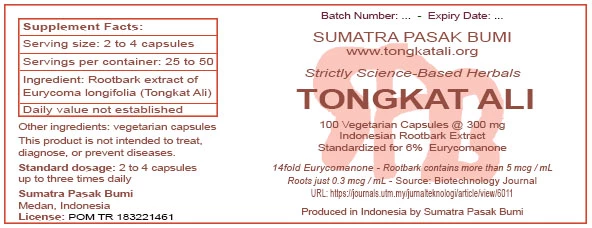
Details of This Product, click here
Reviews, click here
Documentation, click here
Order history 1300 CAD or more - Free double quantity
1 container of 400 capsules of 320 mg
$580
Traditional Tongkat Ali Root Extract
Manufactured by Sumatra Pasak Bumi, Standardized for 2% Eurycomanone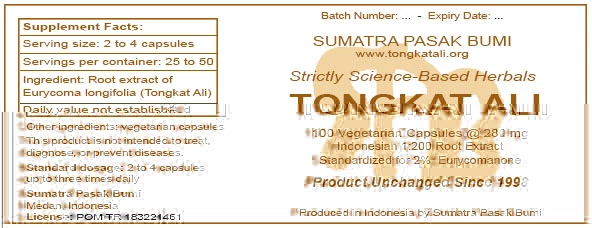
Details of This Product, click here
Reviews, click here
Documentation, click here
Order history 1300 CAD or more - Free double quantity
1 container of 400 capsules of 280 mg
$530
Tongkat Ali Leaf Extract
Manufactured by Sumatra Pasak Bumi, Standardized for 10% Eurycomanone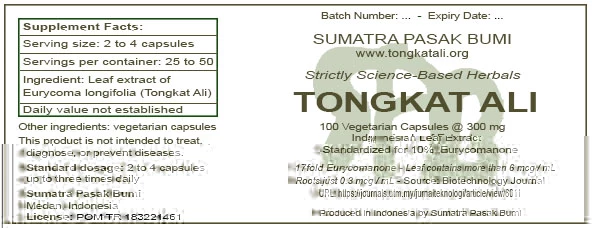
Details of This Product, click here
Reviews, click here
Documentation, click here
Order history 1300 CAD or more - Free double quantity
1 container of 400 capsules of 300 mg
$800
Black Ginger (กระชายดำ) Extract
Manufactured by Sumatra Pasak Bumi, Standardized for 10% Polymethoxyflavones (PMF)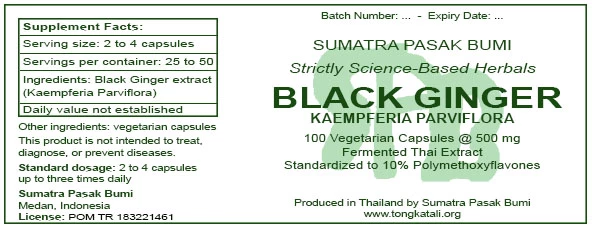
Details of This Product, click here
Reviews, click here
Documentation, click here
Order history 1300 CAD or more - Free double quantity
1 container of 400 capsules of 500 mg
$480
Butea Superba (กวาวเครือแดง) Extract
Manufactured by Sumatra Pasak Bumi, Standardized for 4% Butein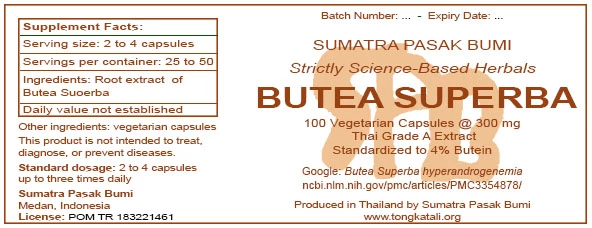
Details of This Product, click here
Reviews, click here
Documentation, click here
Order history 1300 CAD or more - Free double quantity
1 container of 400 capsules of 300 mg
$390
Boesenbergia Rotunda (Fingerroot) Extract
Manufactured by Sumatra Pasak Bumi, Standardized for 4% Pinostrobin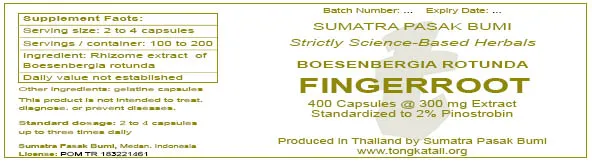
Details of This Product, click here
Order history 1300 CAD or more - Free double quantity
1 container of 400 capsules of 300 mg
$440
Thai Plai Ginger (Zingiber cassumunar) Extract
Manufactured by Sumatra Pasak Bumi, Standardized for 15% Phenylbutenoids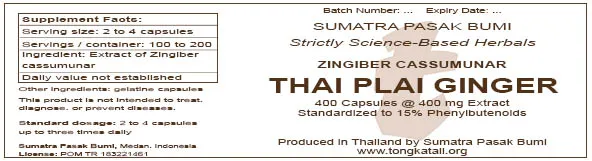
Details of This Product, click here
Order history 1300 CAD or more - Free double quantity
1 container of 400 capsules of 400 mg
$330
Thai Red Turmeric (Curcuma longa) Extract (Village Cultivar)
Manufactured by Sumatra Pasak Bumi, Standardized for 10% Curcuminoids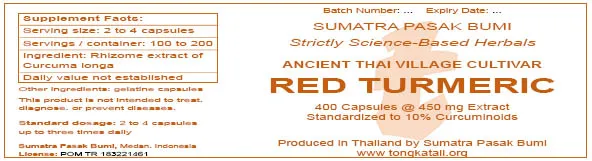
Details of This Product, click here
Reviews, click here
Order history 1300 CAD or more - Free double quantity
1 container of 400 capsules of 300 mg
$310
Tongkat Ali Root Extract Powder
Manufactured by Sumatra Pasak Bumi, Standardized for 2% Eurycomanone Reviews, click here
Order history 1300 CAD or more - Free double quantity
1 pouch of 400 grams
$620
Click here to check our quality standards