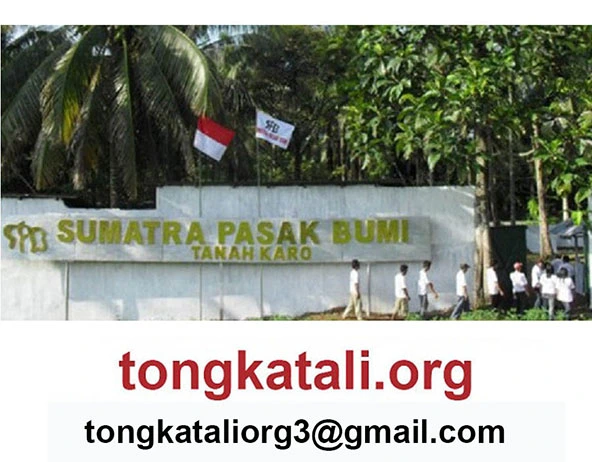
PT Sumatra Pasak Bumi holds Indonesian government licenses to harvest Eurycoma longifolia (Tongkat Ali, pasak bumi) from the forests of North Sumatra and to process and export the extract. That licensing is the legal baseline. It does not by itself tell a buyer much about what is actually in the product.
The Tongkat Ali market has a contamination problem that is well documented. A study by Ang, H. H., et al. in the Journal Human & Experimental Toxicology, Analysis of lead content in herbal preparations in Malaysia found lead content in Malaysian Tongkat Ali products ranging from 10.64 to 20.72 ppm. Tests of our own products showed 0.10 (KBioCorp Lab in Malaysia) — that is more than 100 times less lead, and way, way below what governments consider acceptable levels. Malaysian industrial development from the 1980s onward contaminated soils and waterways in ways that have worked into botanical supply chains there. North Sumatra, and particularly the highland forests around Mt. Sinabung where we harvest, has a different industrial history. But we do not ask buyers to take that on trust. We test, and we publish the results.

Where we test
Testing is done across four independent laboratories, in three countries. No single lab does everything. The practical reason for this is that no single facility outside of very large pharmaceutical operations has the full range of equipment and accreditation needed to run heavy metals, microbiology, and active compound verification on the same batch. We use laboratories that are the right fit for the specific analysis.
Certified Laboratories, Burbank, California, USA — microbiology. An ISO 17025-accredited US lab covers total plate count, yeast and mold, coliforms, E. coli, Salmonella, and Staphylococcus aureus. US accreditation matters for our American buyers who have their own compliance requirements.
PT Saraswanti Indo Genetech, Bogor, Indonesia — broad-spectrum analysis. Saraswanti runs the most extensive panel: heavy metals including lead, cadmium, mercury, and arsenic; pesticide residue screens; moisture content; ash; and active compound verification. They are one of the most capable contract laboratories in Indonesia.
KBioCorp, Kedah, Malaysia — heavy metals specialist. A second independent heavy metals analysis done in Malaysia, giving a cross-check on the Indonesian results. Two independent labs on the same parameter is not redundancy for its own sake — it is because the lead question specifically is one buyers ask about, and a single lab result is less convincing than two agreeing results from different countries.
Universitas Sumatera Utara (USU), Medan — microbiology. The university microbiology laboratory handles E. coli and yeast/mold testing locally. USU is the primary university of North Sumatra and has a longstanding relationship with the company going back to the early years of operation.
The certificates
Certified Laboratories (Burbank, California, USA) — Microbiology Certificate of Analysis
PT Saraswanti Indo Genetech (Bogor, Indonesia) — Extensive Certificate of Analysis
KBioCorp (Kedah, Malaysia) — Heavy Metals Certificate of Analysis